

What Is Feel?
Updated: Dec 13, 2018
Feel is one of those elusive concepts that many people use, but maybe don't define, in many different areas of life. Painters, boxers, fishermen, and writers use it. Bakers, schoolteachers, and surgeons must know it. Feel is intuiting what it takes (no more, no less) to accomplish a task with grace and skill.
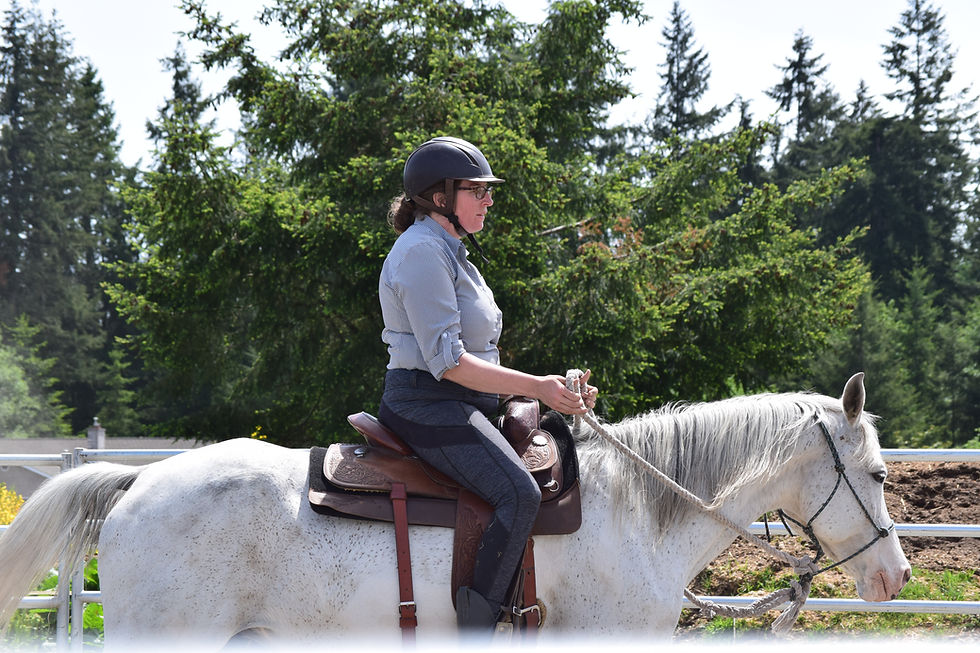
And so "feel" is a major element of good horsemanship. Without feel, our horses would either be as sluggish as room-temperature molasses or as reactive as a runaway kite. Feel is what we possess as humans that grounds us to horses and their instincts. We all have it to some degree, but we also all owe it to the horse to improve and hone this skill.
The point is that horses come by "feel" naturally. They don't have to overthink how much it takes to move a buddy out of the way to be the first one to the hay pile or to lift a hind leg to scratch at a bug bite behind their right ear. They do this without question -- it's part of what makes them such amazing animals.
As humans, we are clumsy, neurotic, and try way too hard at most things in life. This tendency to overdo everything is what makes it's difficult for many of us to grasp "feel." In its most basic sense, you use feel every day. Whenever you spread peanut butter on a piece of bread or merge lanes with your car, that's feel. You aren't thinking through every little step, yet you do it with natural skill. Use too much pressure with your knife and you'll punch holes in your bread; overshoot changing lanes and you may sideswipe someone.
But that bread stays in one piece and your car stays safe between the lanes of the road because of -- you guessed it -- feel. The more you go through your life, the more you'll realize how often feel helps inform your actions and keeps things running smoothly. You might even call it Zen, once you tap into the ebb and flow that helps you accomplish tasks using as little as possible, but as much as necessary, to get the job done.
And so the same applies to horsemanship. You owe it your horse to notice always how little it takes to ask them to step a hind foot over, yield to your rein, or roll into a soft trot. If you don't get a response, you can try with a little more "oomph" next time and observe that result. Sometimes you may need to firm up quite a bit to establish a response, and that's Okay as long as you always offer softness once again.
Open your mind and try it. Your horse will thank you. I promise.
Now, next time you go see your horse, think about this concept of feel and aim for lightness and awareness. For future posts on shaping feel and timing, come back and visit this blog.

So true.